


Who Invented the Guitar? Full History or Real Inventors
Who Invented the Guitar? A Deep Dive into Its Origins and Evolution
The guitar, an instrument beloved by millions, boasts a rich history that spans continents and centuries. From ancient stringed instruments to the modern electric guitar, its transformation is a testament to human creativity and cultural exchange. This article delves into the multifaceted origins of the guitar, highlighting pivotal moments and figures that have contributed to its development.

Table of Contents
1. Ancient Precursors to the Guitar
The Oud and Its Influence
The oud, a pear-shaped stringed instrument, is often cited as a precursor to the modern guitar. Originating in ancient Mesopotamia, the oud spread throughout the Middle East and into Europe, influencing the development of various stringed instruments.

The Vihuela and Renaissance Innovations
In 15th-century Spain, the vihuela emerged as a prominent instrument. Resembling the modern guitar in shape and tuning, the vihuela played a crucial role in transitioning from medieval to Renaissance music.

2. The Emergence of the Modern Acoustic Guitar
Antonio de Torres Jurado's Contributions
Antonio de Torres Jurado, a 19th-century Spanish luthier, is often referred to as the father of the modern classical guitar. He standardized the guitar's body shape and introduced the fan bracing system, enhancing the instrument's volume and tonal quality.
Christian Frederick Martin and Steel Strings
Christian Frederick Martin, a German-born American luthier, revolutionized the acoustic guitar by introducing steel strings in the 19th century. This innovation allowed for greater volume and a brighter tone, catering to the evolving musical styles of the time.
Interested in learning more about how guitar construction impacts sound? Check out our Guitar Theory Simplified book — it's packed with insights on how theory and technique connect to instrument design.

3. The Birth of the Electric Guitar
George Beauchamp and the "Frying Pan"
In the early 1930s, George Beauchamp, in collaboration with Adolph Rickenbacker, developed the first commercially successful electric guitar, nicknamed the "Frying Pan" due to its circular body. This lap steel guitar utilized electromagnetic pickups to amplify sound.

Les Paul's "The Log"
Les Paul, an American guitarist and inventor, created "The Log" in the 1940s—a solid-body electric guitar prototype. By attaching strings and pickups to a solid block of wood, he minimized feedback and enhanced sustain, laying the groundwork for future electric guitars.

Leo Fender's Mass Production Revolution
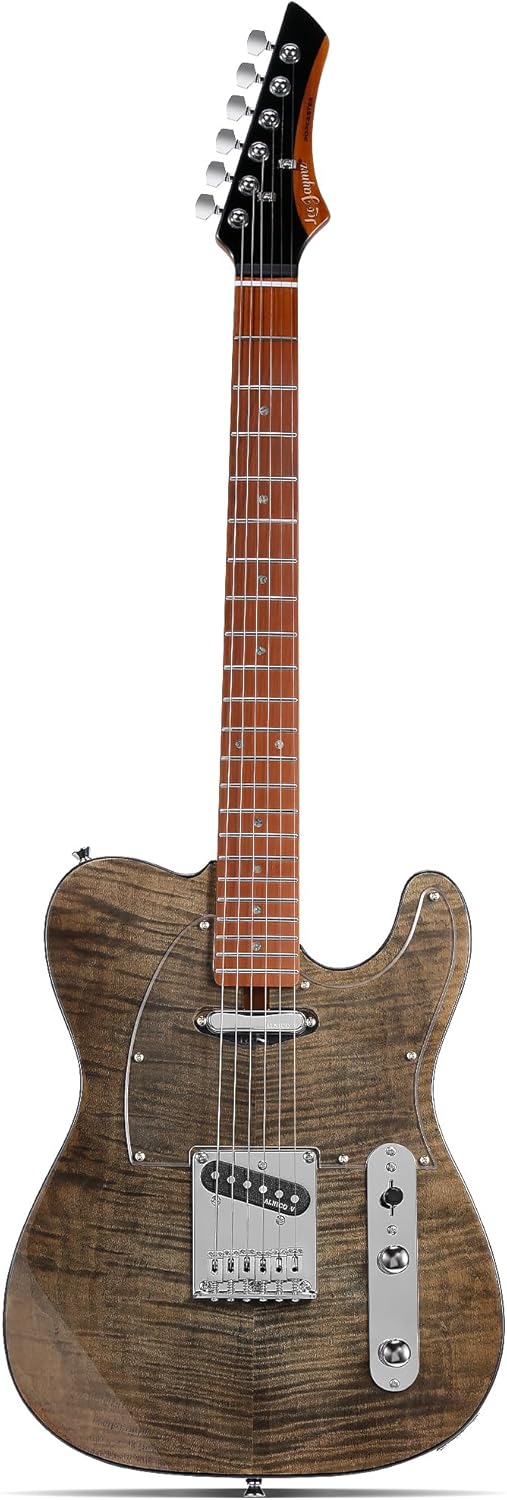
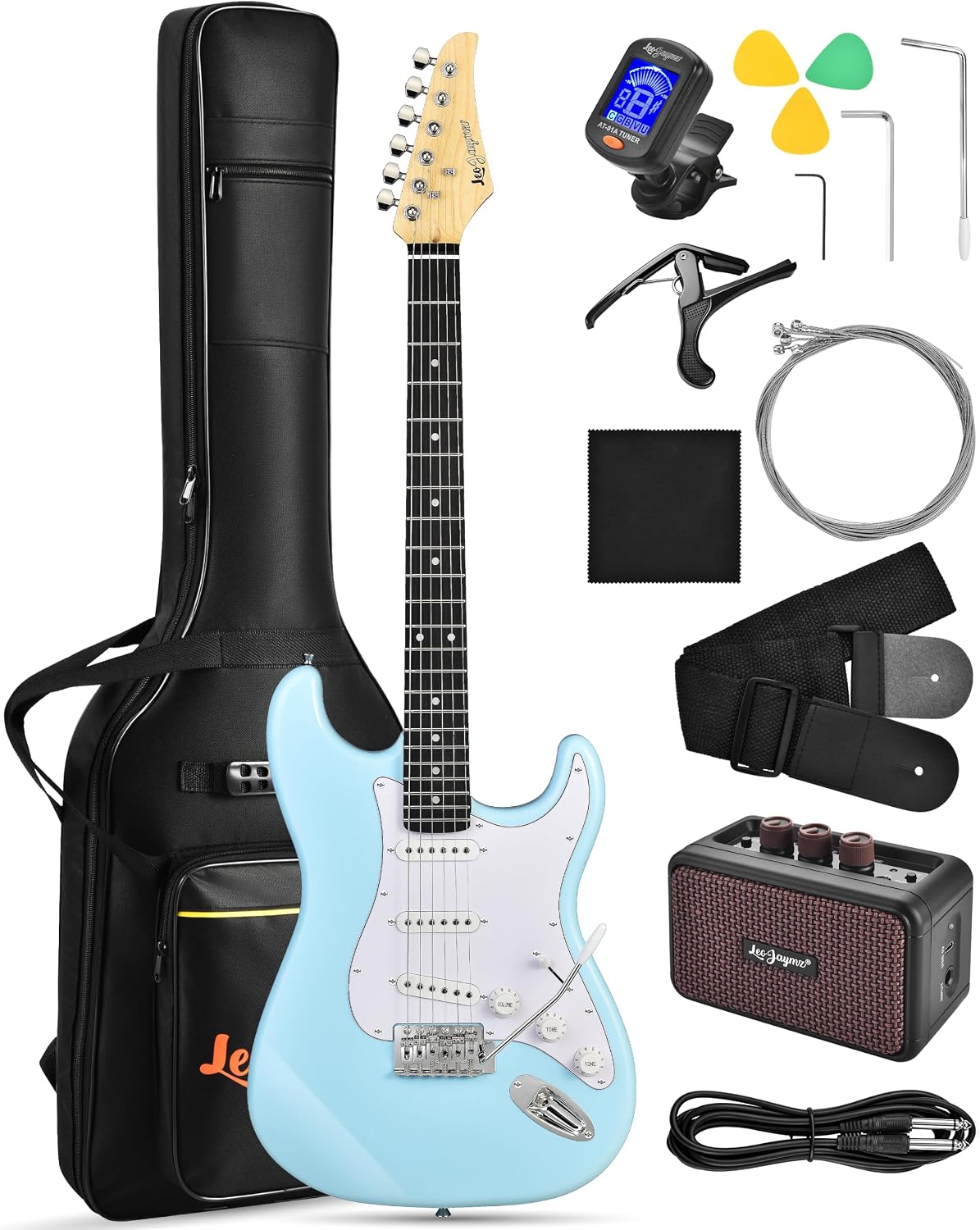
Leo Fender, founder of Fender Musical Instruments Corporation, introduced the first mass-produced solid-body electric guitar, the Fender Telecaster, in 1951. His designs, including the Stratocaster and Precision Bass, became iconic in rock and roll history.

If you're exploring guitar history and want to solidify your knowledge of how modern guitars evolved, our Guitar Theory Cheat Sheet Poster and Guitar Chords Chart Mousepad offer quick, visual overviews of chords, scales, and fretboard layout.
4. Controversies and Misattributions
The Case of Robert F. Flemming Jr.
Some sources attribute the invention of the modern guitar to Robert F. Flemming Jr., an African American inventor who patented a guitar design in 1886. However, his design was one among many during a period of significant innovation in stringed instruments.
Clarifying Common Misconceptions
While figures like Flemming made notable contributions, it's essential to recognize that the guitar's development was a cumulative process, influenced by various cultures and inventors over time.
To better understand how different innovations shaped the instrument we know today, read our article on Understanding Chords in Music.
5. Conclusion
The guitar's evolution is a rich tapestry of cultural exchanges, technological advancements, and individual innovations. From ancient instruments like the oud to modern electric guitars, each iteration reflects the spirit of its time. Understanding this history not only deepens our appreciation for the instrument but also honors the diverse contributions that have shaped its journey.
Ready to take your guitar knowledge further? Start with our Guitar Fretboard Stickers to learn the notes on the neck, or go all-in with the Guitar & Bass Theory Books Bundle.
Hot Sellers
More






News
More-

Which Guitar Is Best for Beginners: Acoustic or Electric?
-

What is the Average Price of an Acoustic Guitar?
-

Can I teach myself to play guitar?
-

How Long Does It Take the Average Person to Learn Acoustic Guitar?
-

What is the Easiest Acoustic Guitar to Learn On?
-

Is a 12-string guitar for beginners?
-

Which guitar is best for beginners?
-

What is a 12-string guitar best for?